A blocked pipe is usually inside your property, such as the waste pipe beneath a sink, while a blocked drain is usually outside, in the underground network that carries water away. The difference changes how an engineer finds and clears the fault, but it does not change who you should call, because our team at Drainsco deal with both.
This guide to blocked drains vs blocked pipes provides plain-English explanations for some of the drain terminology you’ll usually encounter. Next time you encounter a problem, you’ll be able to describe the issue accurately when you phone for help or compare quotes.
When people ask for help, they often use “blocked pipe” and “blocked drain” as if they mean the same thing. That is understandable, because water that will not clear is the symptom either way. Even so, the two words describe different parts of your property, and the difference is worth understanding.
The confusion grows because the blocked pipe vs drain question has no single official answer in casual conversation. A plumber might call the waste pipe under your basin a drain, while a surveyor might use the word only for the buried runs outside. In general, “pipe” means the pipework inside your property that serves a sink, bath, shower or toilet. “Drain” means the larger network that collects that water and carries it towards the sewer. That split only helps once you can picture where each part sits, which is the next thing to look at.
Inside your home, waste leaves each sink, bath, shower and toilet through its own short length of pipework. Those branches join a larger vertical pipe called the soil stack, which carries everything down towards the ground. Any fault along that route is an indoor pipe blockage, and it usually affects only the fitting it serves.
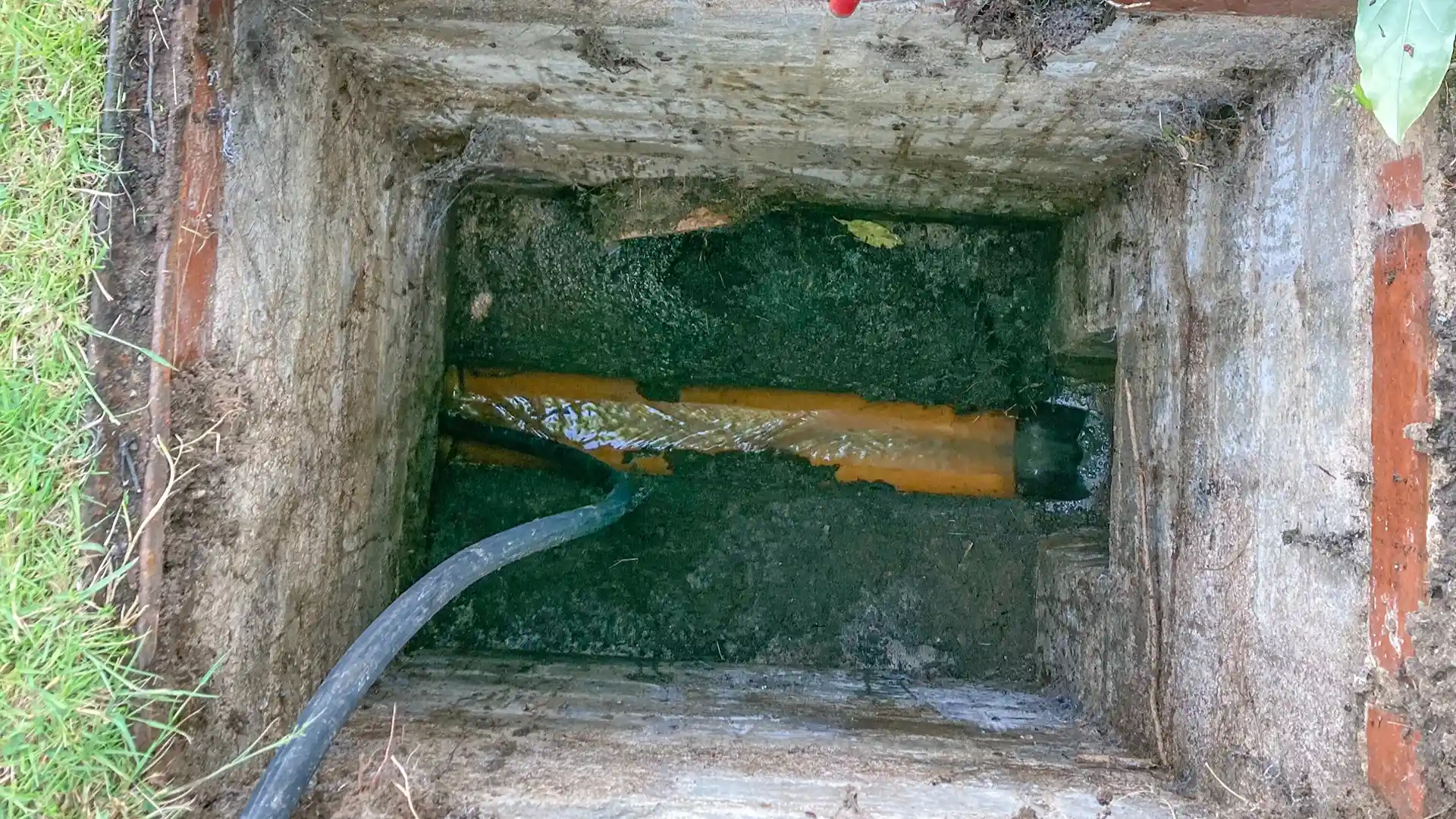
At the base of the building, the waste passes into the underground drain. This runs through an inspection chamber, a covered access point that lets an engineer see and reach the pipe, before joining the shared sewer. Here, the subject of blocked drains vs blocked pipes stops being a question of vocabulary and becomes one of location, since the same water travels through both.
Knowing where a fault sits is only half the picture, because the clues you notice at home depend on which side of that boundary the problem is on.
A fault in your indoor pipework is usually local. One sink drains slowly, one basin gurgles, or a single toilet struggles to flush while everything else works normally. When comparing a blocked pipe vs blocked drain, the signs can differ because an underground fault affects everything that feeds into it.
These signs are more typical of a problem outside:
If you notice that last sign, the situation has moved beyond inconvenience. Emergency drain unblocking is the right response, because wastewater inside the property is a health risk as well as a nuisance. Whichever signs you recognise, the next question is how an engineer deals with each.
The practical difference between blocked drains vs blocked pipes lies in how an engineer reaches the fault. Indoor pipework is usually within arm’s length and easy to reach. A blockage there can often be cleared by rodding, which means pushing a flexible rod through the pipe to break up the obstruction, or by a plunger.
An underground drain blockage is harder to see and further away. For that, we use a CCTV survey, in which a small camera travels along the pipe and shows us what is wrong. We then use jetting, which sends high-pressure water along the pipe to scour the walls clean. Without the footage we would be guessing at the cause, which is why diagnosis comes first in either case. Since the method follows the evidence, the name you give the problem matters less than you might expect, but it can cause real confusion once quotes arrive.
The difference between a blocked pipe and blocked drain matters to the engineer rather than to the person calling. One phone call to us covers both, as we will work out which part of the system is affected when we arrive, so you never need to diagnose it yourself.
Where you need to be more aware is when quotes arrive. One firm may describe the job as clearing a pipe, another as unblocking a drain and a third as a drain repair, even though all three describe the same fault. When you compare prices, it is worth asking what exactly is being cleared, whether a CCTV survey is included and whether the price is fixed before work begins. That way, you are comparing like with like, and those same three points show how we approach every job from the very first call.
Whether the fault is indoors or underground, our process is the same, and it matters little whether you say blocked drains vs blocked pipes when you ring us. Here is what happens next:
Our engineers are fully qualified, insured and DBS-checked, and they cover domestic and commercial properties across much of England. With the process clear, only one step remains, which is getting in touch.
Blocked pipes and blocked drains describe different locations, yet both are confirmed by evidence rather than assumption, and you do not need the right label to ask for help. Note what you can see, hear or smell, then call 0808 303 0777 at any hour or send the details through the contact form on our website.
Whatever you call the problem, we will find the cause, show you the footage and put it right for a fixed price.

Drainsco provides 24/7 drainage services for homes and businesses, including drain unblocking, CCTV drain surveys, drain jetting, repairs and emergency drainage support across England and Wales.