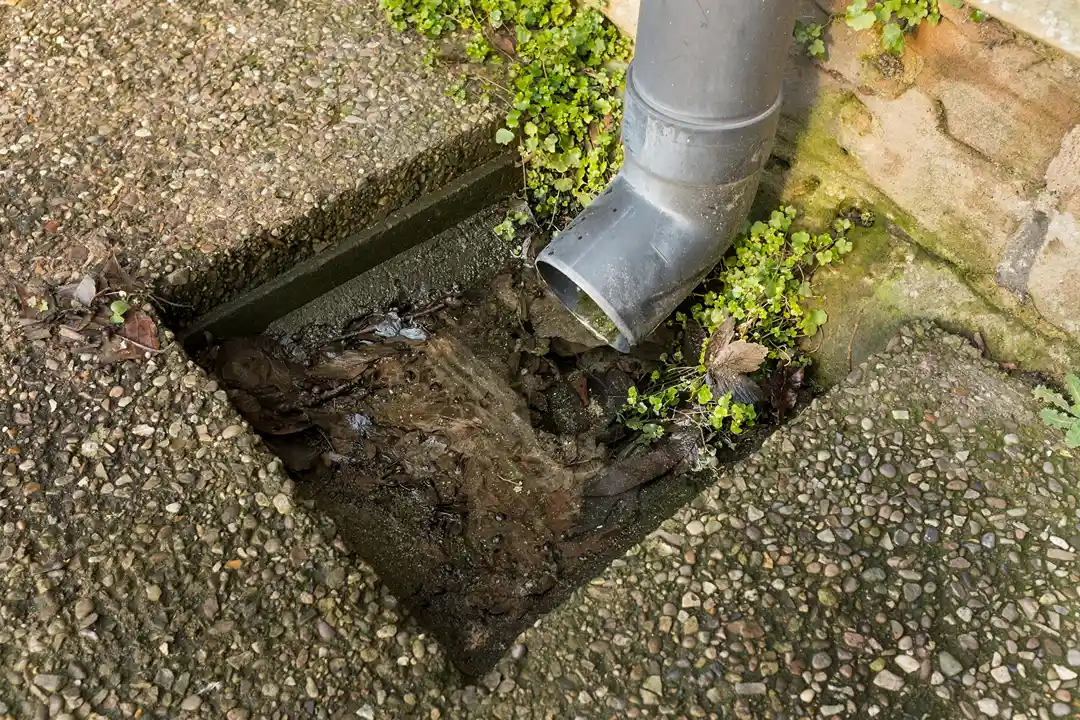
If you’re dealing with a blocked drain, you’ll usually know about it. Most blocked drains come down to a handful of causes, such as fat, wipes, hair or tree roots, and nearly all of them give warning signs before the water stops draining. Whether you can act ultimately depends on whether the pipe belongs to you or the water company, how the blockage has developed, and whether a plunger will suffice.
Some blockages respond to DIY approaches, while others need professional intervention. And knowing which you need can save you a lot of hassle. This drain blockage overview covers what you need to know, from causes and symptoms to drain responsibility and the limits of DIY, so you can see where your own problem fits.
Most blockages start with something that should never have gone down the drain, or with something that has slowly built up inside it. Cooking fat cools and coats the pipe walls, most wet wipes fail to break down the way toilet paper does, and hair and soap scum gather in sinks, showers and baths until water struggles to pass.
Outside the house, tree roots can enter through small cracks, while a displaced or collapsed pipe can catch debris at the same spot every time. Knowing which cause you are dealing with matters because it helps you decide how to unblock a drain, and a one-off clog needs a different fix from a fault in the pipe itself. You rarely see the cause directly, so the first clue is how the drain behaves.
The signs are usually pretty easy to stop, and they often follow a predictable pattern. The earliest sign usually relates to a sink, shower, or bath that drains more slowly, often accompanied by a gurgling sound as trapped air forces its way past the blockage. A smell of sewage suggests waste is no longer moving freely, and water pooling around an external drain cover points to a blockage further along the pipe, away from where you can see it.
If several fixtures slow down together, the fault is probably in the main run rather than in a single trap. The most serious symptom is sewage backing up into a bath, shower or toilet, which needs attention the same day. Spotting these patterns early is one of the simplest ways to keep drain problems for homeowners small and inexpensive.
Once you know what you are seeing, the next question is who is responsible for putting it right.
The answer depends on where the blockage sits. The pipe that carries waste from your home to the edge of your property is a private drain, and in most cases, you are responsible for keeping it clear. Since October 2011, water companies have taken over most pipes shared by two or more properties, together with the section of a private drain that lies beyond your boundary.
When considering matters involving a private drain vs sewer installation, the answer determines who pays for a repair. Rules differ for some properties, so check with your water company if you are unsure where your own pipe ends. Ownership also shapes how to unblock a drain sensibly, because there is little point clearing your own pipe when the fault lies in a public sewer further along.
For a slow sink or a lightly blocked toilet, a few careful steps are reasonable before you call anyone. Here is how to unblock a drain at the simplest level:
Equally important is knowing what to avoid. Strong chemical cleaners can damage older pipes and are unpleasant to handle, and forcing drain rods into an unfamiliar system can push a blockage deeper or damage a joint. Sensible drain maintenance advice is to bin fat and wipes instead of rinsing them away, and to fit a strainer over the plughole. If the water has not cleared after a couple of attempts, DIY has reached its limit, which is when an engineer should step in.
Some problems are beyond a plunger, and the sooner you recognise them the better. Call an engineer if you notice any of these signs of a blocked drain:
At that point, knowing how to unblock a drain matters less than finding out why it keeps blocking, and a CCTV survey does exactly that by sending a small camera through the pipe so that the fault can be seen rather than guessed at. Regular upkeep helps prevent a repeat, but only a clear diagnosis tells you whether the pipe needs clearing or repairing. So, what does a visit involve?
When you call our team at Drainsco in an emergency, an engineer reaches you in 45 minutes on average, at any hour, every day of the year. We start with a CCTV survey and a written report with the footage, so you can see the fault for yourself, and if ownership is unclear, we can help you establish drain responsibility.
Once the cause is confirmed, we will explain what work needs doing, how long it will take, and how much it’ll cost. You’ll receive a fixed-price quote before any work starts and there are no call-out charges to worry about. Plus, all repairs and new installations carry a 10-year guarantee, so you’re fully covered.
This blocked drain guide has shown that the cause, the symptoms and who owns the pipe all shape the right fix, and that a clear diagnosis should come before any repair. Call our team on 0808 303 0777, or use the contact form on our website, and we will arrange a CCTV survey and give you a fixed price before any work begins.
A blocked drain rarely clears itself, so finding the cause is the sensible next step.

Drainsco provides 24/7 drainage services for homes and businesses, including drain unblocking, CCTV drain surveys, drain jetting, repairs and emergency drainage support across England and Wales.