Call us on 0808 303 0777

Drain Jetting & Rodding — Professional-Grade Clearance for Every Blockage

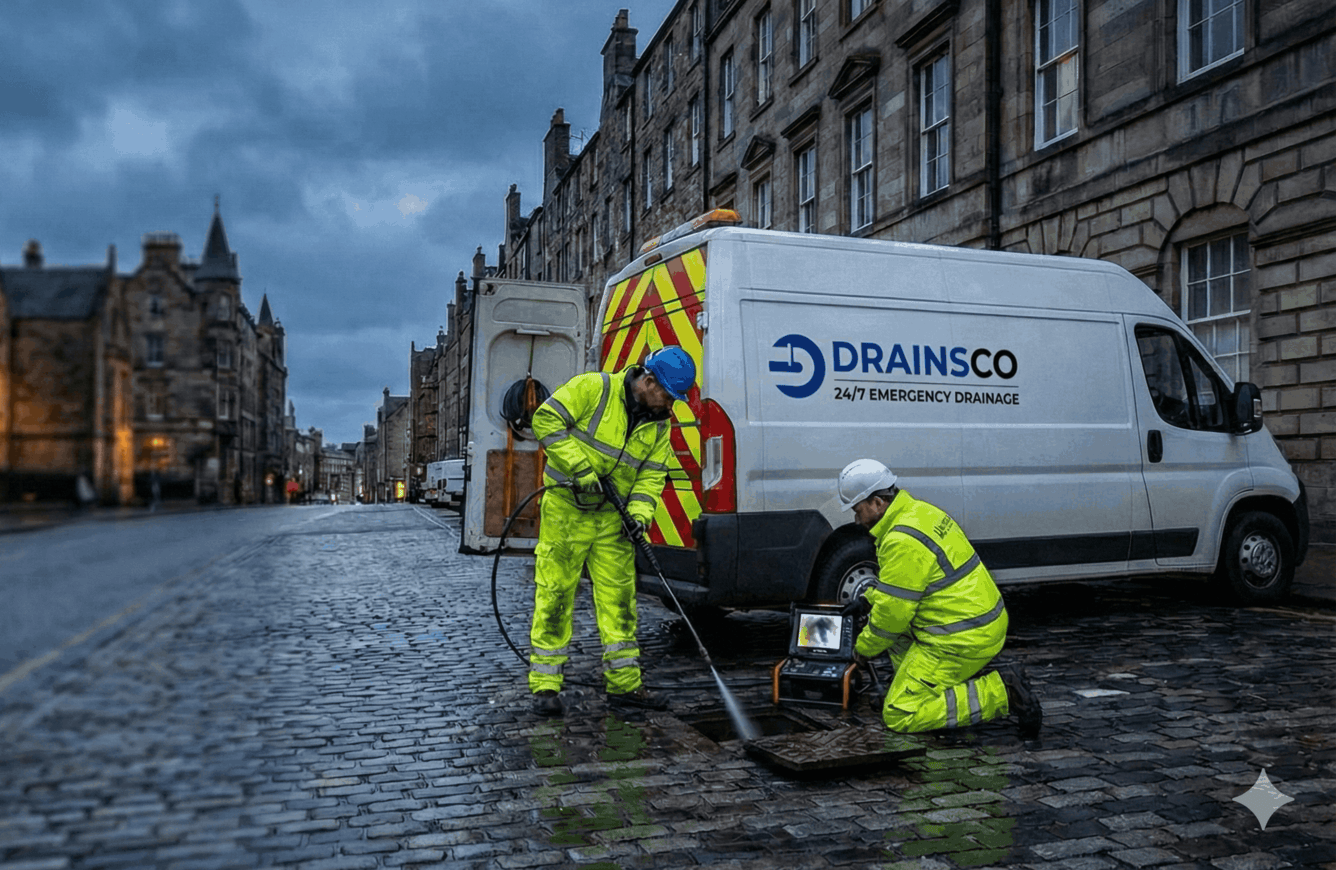
Drain jetting and rodding are the two most effective professional methods for clearing blocked, slow-running, or scale-encrusted drains. DrainsCo deploys both methods across residential and commercial properties in England, selecting the right approach based on pipe size, blockage type, and system condition.

Our jetting units deliver up to 4,000 PSI of targeted water pressure, while our electro-mechanical rodding equipment handles smaller-diameter pipes and solid obstructions with precision. Both methods are available 24/7, priced transparently, and backed by our workmanship guarantee.
  • No call-out surcharges.
  • No night-rate premiums.
  • No weekend markups.
Just fast, reliable drain unblocking when you need it most.
1.5k Reviews
What we offer

High-Pressure Water Jetting

What is High Pressure Water Jetting?

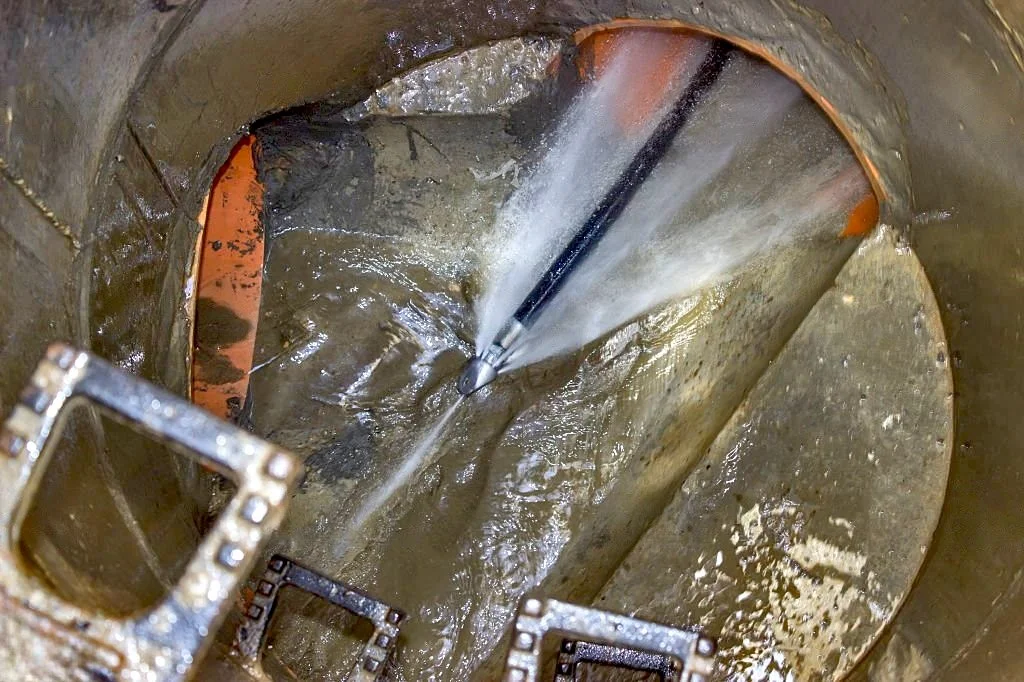
High-pressure water jetting forces a concentrated jet of water through specialist nozzles at pressures of up to 4,000 PSI (275 bar). The nozzle is fed through the drain on a flexible hose, scouring the pipe walls as it travels and flushing all debris downstream to a collection point. Different nozzle types are used for different blockages: forward-firing jets for penetrating solid obstructions, rotating heads for grease and scale removal, and root-cutting nozzles for tree root intrusion

When is Water Jetting Used?

Drainage experts at DrainsCo often suggest to go for water jetting in case of :
  • Grease and fat blockages — The most common domestic and commercial drain issue. Jetting is the only effective method for removing hardened fat deposits from pipe walls.
  • Silt and sediment build-up — Particularly in surface water drains, gullies, and land drainage systems where soil and debris accumulate over time.
  • Tree root intrusion — Specialist root-cutting nozzles sever root mass inside the pipe and flush it clear. Often combined with CCTV inspection to assess the extent of root damage.
  • Scale and mineral deposits — Hard water areas produce internal scale that reduces pipe capacity. Descaling nozzles strip the mineral layer and restore full bore.
  • Preventative cleaning — Regular jetting as part of a maintenance programme keeps drains flowing freely and extends system lifespan.

Residential vs Commercial Jetting

For domestic properties, our drainage engineers typically deploy compact jetting units rated to 3,000–4,000 PSI, suitable for 50mm–160mm internal diameter pipes. For commercial and industrial applications such as restaurant kitchens, food processing facilities, multi-occupancy buildings, and mains-scale infrastructure, drainage experts at DrainsCo use trailer-mounted jetting systems with higher flow rates and extended hose reach.

Drain Rodding

Electro-Mechanical Rodding

What is Drain Rodding?

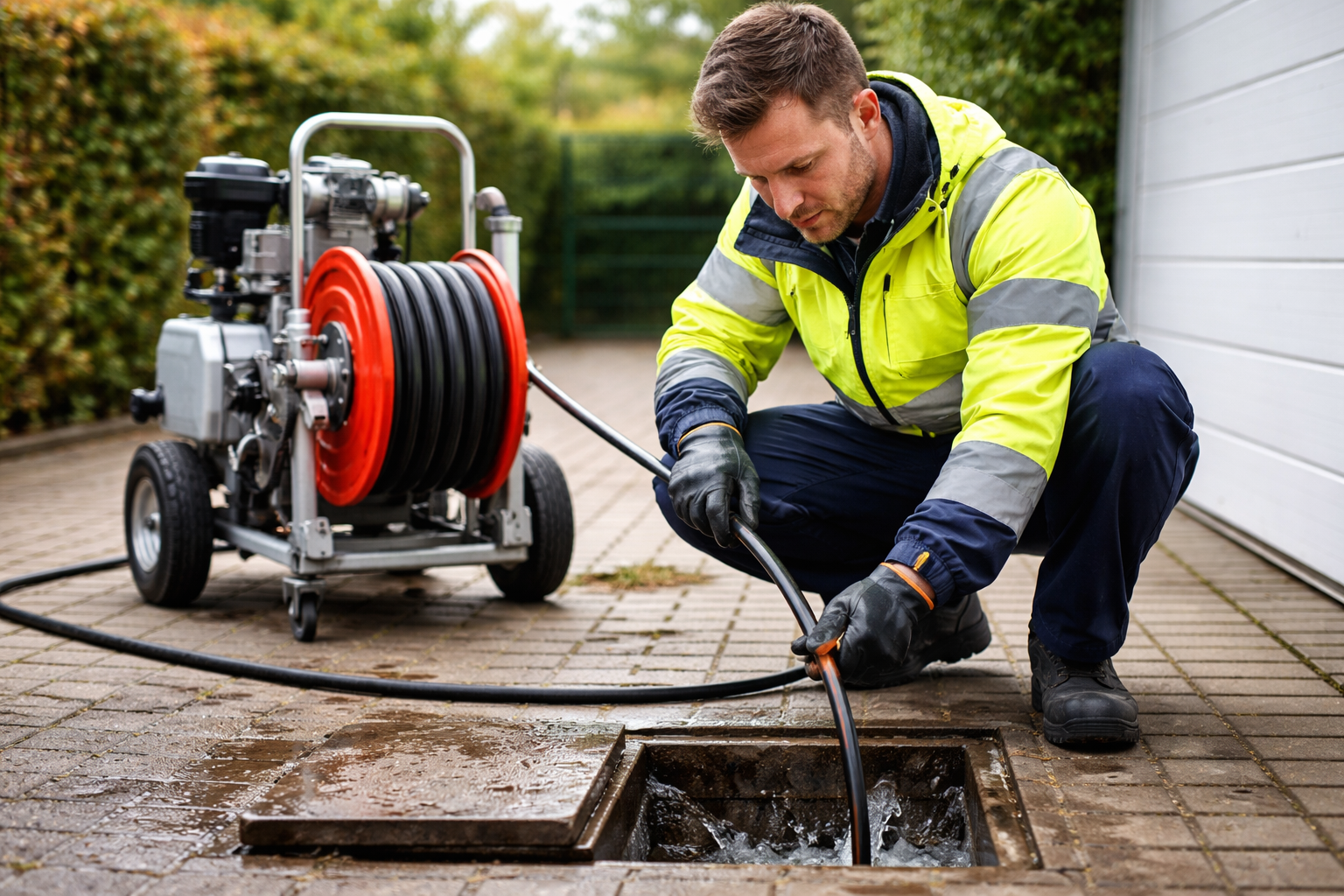
Electro-mechanical rodding uses a powered, rotating steel cable fitted with an interchangeable cutting head. The cable is fed into the drain and the spinning head breaks through solid blockages, scrapes scale and debris from the pipe walls, and can cut through compacted material that jetting alone may not dislodge.

When is Drain Rodding Used?

Drainage experts at DrainsCo often suggest to go for electro-mechanical rodding in case of :

  • Toilet and soil pipe blockages — Where access for jetting equipment is restricted or the blockage is close to a fixture.
  • Hardened deposits in small-diameter pipes — Lead, iron, and early copper waste pipes that respond better to mechanical action than water pressure.
  • Compacted solid obstructions — Foreign objects, concrete residue, or hardened aggregate that has entered the drainage system.
  • Situations where water volume must be minimised — Internal drains, basement pipes, and environments where water overspray would cause secondary damage.

Jetting vs Rodding: How We Choose

The method we use depends on the blockage type, pipe material, pipe diameter, and access conditions. In many cases, we combine both methods: rodding to break the initial obstruction, followed by jetting to fully clean the pipe and flush debris. Your DrainsCo engineer will assess the situation on-site and recommend the most effective approach before quoting.

Process

The Jetting & Rodding Process

Access & inspection

The engineer locates the nearest access point (manhole, inspection chamber, or drain opening) and carries out a visual or CCTV assessment to determine the blockage location and type.

Method selection

Based on the diagnosis, the engineer selects jetting, rodding, or a combination and explains the approach to you.

Clearance

The blockage is systematically broken down and flushed through the system. For jetting, the nozzle makes multiple passes to ensure the pipe walls are fully cleaned.

Post-clearance CCTV check

A camera is passed through the cleared section to confirm full flow, check for structural damage revealed by the clearance, and record a visual baseline.

Report & aftercare

You receive a written summary, any CCTV footage, and recommendations. The work is covered by your DrainsCo workmanship guarantee.

Frequenty Asked Questions

We believe in complete transparency. Here are the most frequent questions we receive from our customers regarding our 24/7 drainage solutions.

Most domestic drain jetting jobs cost between £80 and £250, depending on the severity of the blockage and the length of pipe requiring clearance. DrainsCo provides fixed-price quotes on-site, and our rates are the same 24/7 with no call-out surcharge.

Yes, when carried out by trained professionals. DrainsCo engineers adjust water pressure based on pipe material, age, and condition. We never use maximum pressure on fragile or deteriorated pipework. A CCTV pre-check identifies any pipes that require a lower-pressure approach or mechanical rodding instead.

Jetting uses high-pressure water to cut through blockages and clean pipe walls. Rodding uses a rotating mechanical cable to physically break through obstructions. Jetting is more effective for grease, scale, and root intrusion; rodding is better for solid objects and small-diameter pipes. DrainsCo engineers often combine both methods for the best result.

For most residential properties, an annual jetting service prevents build-up and catches early problems. Commercial kitchens and food outlets benefit from quarterly or monthly jetting depending on usage. DrainsCo offers planned maintenance contracts with scheduled jetting visits.

Professional jetting at appropriate pressures does not damage sound pipework. DrainsCo engineers are trained to assess pipe condition before jetting and will not use high pressure on pipes showing signs of fragility. If a CCTV check reveals the pipe is too deteriorated for jetting, we’ll recommend an alternative approach.


Copyright © 2026 Drains Co. all rights reserved.
In a hurry? Call us directly at 0808 303 0777

Need Expert Drainage Advice?

Day or night, we’ve got you covered. Complete the form below for an instant callback and a free estimate.
Locations we serve